
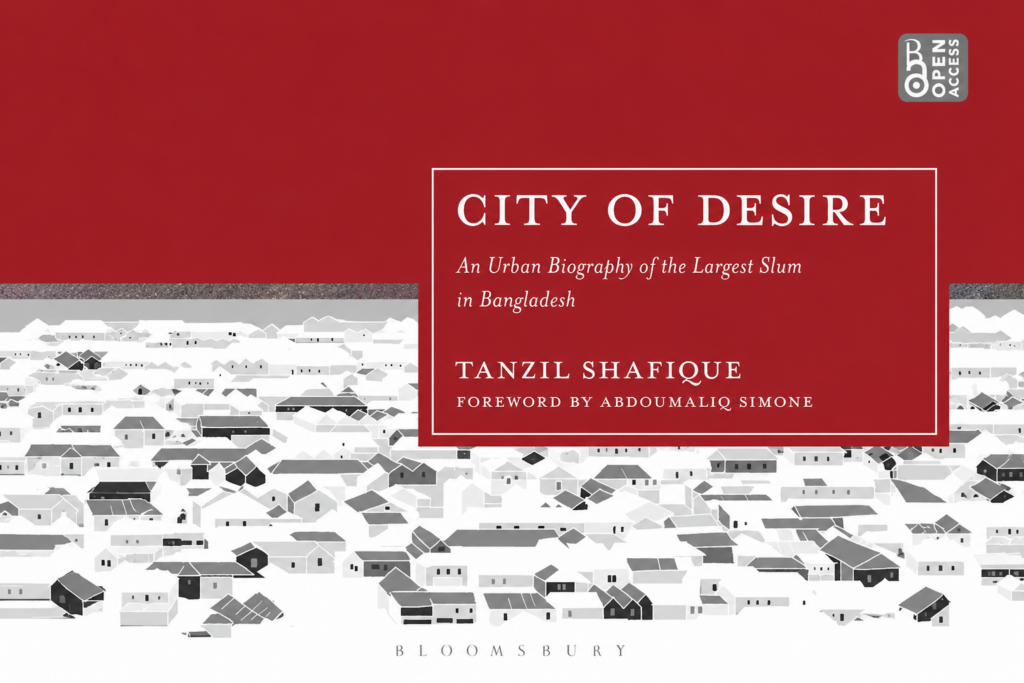
 From Justice to Ihsaan: Korail, City of Desire, and a Qur’anic Horizon for Climate Justice || Tanzil Shafique
City of Desire An Urban Biography of the Largest Slum in Bangladesh. A profound reflection on informality, everyday city-making, and the Qur’anic...
From Justice to Ihsaan: Korail, City of Desire, and a Qur’anic Horizon for Climate Justice || Tanzil Shafique
City of Desire An Urban Biography of the Largest Slum in Bangladesh. A profound reflection on informality, everyday city-making, and the Qur’anic...

Dr Tanzil Shafique is a Senior Lecturer (Associate Professor) of Urban Design at the University of Sheffield, where he also serves as School Lead for Student Recruitment and has held senior leadership roles, including Director of Postgraduate Taught Programmes and Programme Director for the MA Urban Design. He is an Associate of the University of Sheffield Urban Institute and Co-Lead of the Sheffield Design Lab.
Tanzil’s research focuses on informal housing and livelihoods in Global South cities, particularly where these are shaped by climate change, extractivist development, and colonial-capitalist legacies. Grounded in decolonial and pluriversal epistemologies, his work combines critical urban theory with long-term, embedded engagement alongside informal settlement communities, youth movements, and grassroots organisations. A central concern of his scholarship is how everyday practices of care, stewardship, and spatial adaptation generate alternative futures beyond dominant planning and development paradigms
He leads and contributes to several major, internationally funded research projects. He is Principal Investigator of ReWET – Climate-Impacted Dwellers-Led Agroecological Stewardship for Restoring Wetlands, a £499,995 UK Foreign, Commonwealth & Development Office–funded project co-developing a community-led urban wetland stewardship model in Dhaka’s Korail settlement (www.rewet.info). The project brings together universities, grassroots organisations, and public authorities across Bangladesh, the UK, and the USA, and positions informal settlement residents as environmental stewards and co-designers of climate adaptation. He is also Co-Investigator on large collaborative grants including the EU Horizon programme INNATURE, alongside ongoing work on climate resettlement, informal economies, sanitation transitions, and urban heat adaptation
Tanzil is the author of the monograph City of Desire: An Urban Biography of the Largest Slum in Bangladesh (Bloomsbury Academic, 2024), which has received wide international recognition and is being adopted in postgraduate teaching globally. His other books include Atlas of Informal Settlements (Bloomsbury, 2023) and Off-Grid Toilets (2022). His peer-reviewed articles have appeared in leading journals such as Urban Studies, International Journal of Urban and Regional Research, Transactions of the Institute of British Geographers, Cities, Environment and Urbanization, Housing Studies, and Habitat International. His article “Dirty Research: A Call for Decolonising Urban Knowledge Production” has been widely cited as a methodological intervention in Global South urban studies
Alongside his research, Tanzil is deeply committed to research-led and socially engaged teaching. He has taught architecture and urban design across Bangladesh, the United States, Australia, and the UK, and currently teaches across undergraduate, postgraduate, and doctoral levels at Sheffield. His teaching emphasises participation, decolonial theory, and community-embedded design practice, often through live projects with marginalised communities in the UK and internationally. He has led major curriculum redesign within the MA Urban Design programme and has received multiple nominations and awards for teaching practice and doctoral supervision at the University of Sheffield and previously at the University of Melbourne
Beyond the university, Tanzil plays an active role in policy, professional, and civic engagement. He advises public agencies and civil society organisations in Bangladesh on housing justice, climate adaptation, and urban policy, and currently chairs the Diaspora Experts Advisory Committee to the Mayor of Dhaka (North). He is a steering committee member of Architecture-in-Development, a global platform for socially engaged spatial practice, and is regularly invited to deliver keynote lectures and book talks at leading institutions worldwide.
Tanzil has recently co-founded and is the Honorary Director of “Next50 Bangladesh”, a knowledge exchange think tank that connects the global diaspora to local initiatives and develops collaborative implementation pathways for programme-ready ideas for just and equitable transformations (www.next50bangladesh.com). He co-edited the first volume of the flagship book series, Next50 Collective Futures: Critical Creative Perspectives on the Built Environment in Bangladesh (2025, UPL).
Through his research, teaching, and leadership, Tanzil’s work advances a vision of urban design as a critical, caring, and collaborative practice, committed to climate justice, epistemic plurality, and the co-production of knowledge with those most affected by urban transformation.
আর্টিকেল
From Justice to Ihsaan: Korail, City of Desire, and a Qur’anic Horizon for Climate Justice || Tanzil Shafique
City of Desire An Urban Biography of the Largest Slum in Bangladesh. A profound reflection on informality, everyday city-making, and the Qur’anic...
ভিডিও
এই প্রোফাইলে এখনো কোনো ভিডিও যুক্ত করা হয়নি।
সাম্প্রতিক লেখা
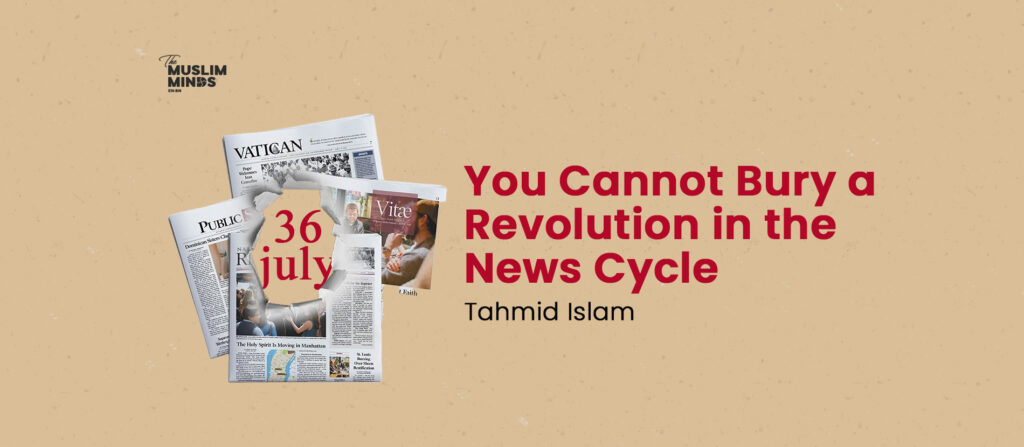 You Cannot Bury a Revolution in the NewsCycle
Every Revolution Has Two Battles The greatest challenge facing the legacy of July 2024 is no longer political repression. It is organized...
You Cannot Bury a Revolution in the NewsCycle
Every Revolution Has Two Battles The greatest challenge facing the legacy of July 2024 is no longer political repression. It is organized...
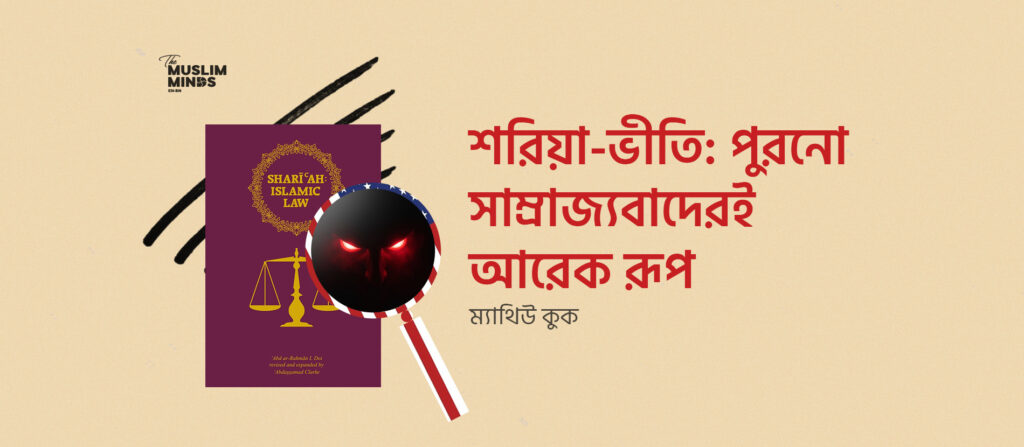 শরিয়া-ভীতি: পুরোনো সাম্রাজ্যবাদেরই আরেক রূপ
ইসলামের বিরুদ্ধে যে যুদ্ধ চলছে, তা শুধু মুসলিমদের বিরুদ্ধে নয়। এই যুদ্ধ আসলে আপনার ও আমার মতো সাধারণ মানুষের বিরুদ্ধে। এর পেছনে...
শরিয়া-ভীতি: পুরোনো সাম্রাজ্যবাদেরই আরেক রূপ
ইসলামের বিরুদ্ধে যে যুদ্ধ চলছে, তা শুধু মুসলিমদের বিরুদ্ধে নয়। এই যুদ্ধ আসলে আপনার ও আমার মতো সাধারণ মানুষের বিরুদ্ধে। এর পেছনে...
 অস্তিত্ববাদের বিরুদ্ধে অভিযোগ ও জবাব || জঁ-পল সার্ত্র
সম্পাদকের প্রাক্-কথন ১৯৪৫ সালের ২৯ অক্টোবর। দ্বিতীয় বিশ্বযুদ্ধ শেষ হওয়ার মাত্র কয়েক মাস পর প্যারিসের 'ক্লাব ম্যাঁতনঁ'-এ জাঁ-পল সার্ত্র যে বক্তৃতাটি দিয়েছিলেন,...
অস্তিত্ববাদের বিরুদ্ধে অভিযোগ ও জবাব || জঁ-পল সার্ত্র
সম্পাদকের প্রাক্-কথন ১৯৪৫ সালের ২৯ অক্টোবর। দ্বিতীয় বিশ্বযুদ্ধ শেষ হওয়ার মাত্র কয়েক মাস পর প্যারিসের 'ক্লাব ম্যাঁতনঁ'-এ জাঁ-পল সার্ত্র যে বক্তৃতাটি দিয়েছিলেন,...
 হেজাজ রেলওয়ের পুনরুজ্জীবন কেন ইজরায়েলের জন্য হুমকি?
বিংশ শতাব্দীর শুরুতে উসমানীয় সুলতান দ্বিতীয় আব্দুল হামিদের উদ্যোগে নির্মিত হেজাজ রেলওয়ে ছিল শুধু একটি পরিবহন লাইন নয়—এটি ছিল রাজনৈতিক, অর্থনৈতিক ও...
হেজাজ রেলওয়ের পুনরুজ্জীবন কেন ইজরায়েলের জন্য হুমকি?
বিংশ শতাব্দীর শুরুতে উসমানীয় সুলতান দ্বিতীয় আব্দুল হামিদের উদ্যোগে নির্মিত হেজাজ রেলওয়ে ছিল শুধু একটি পরিবহন লাইন নয়—এটি ছিল রাজনৈতিক, অর্থনৈতিক ও...